
Manual pipe notchers are hand-operated tools for precise pipe cuts, offering control and portability unlike powered versions. They’re ideal for weld shops and custom projects.
What is a Manual Pipe Notcher?
A manual pipe notcher is a hand-operated tool meticulously engineered to create precise notches in pipes and tubes. Distinct from its powered counterparts, it harnesses human force to drive a cutting arc, granting users exceptional control over the notching process.
These notchers are particularly valued for their portability, allowing for on-site fabrication and repair work. They excel in applications demanding accuracy, such as creating joints for welding or preparing pipes for custom fabrication projects. The tool’s design prioritizes user control and precision.
Why Choose a Manual Pipe Notcher?
Opting for a manual pipe notcher provides distinct advantages, primarily its exceptional portability – weighing around 33 lbs, it’s easily clamped or bolted to a workbench or wall-mounted. This contrasts with larger, stationary powered notchers.
Furthermore, manual notchers offer superior control and precision, crucial for intricate projects. They are perfectly suited for weld shops, frame fabrication, and custom work, even specialized tasks like cutting sink outflows. The lever system minimizes effort while maximizing force application.
Types of Manual Pipe Notchers
Manual pipe notchers include Scotchman models, hand-operated wall-mountable versions, and specialized notchers designed for applications like cutting sink outflows in metal pipes.
Scotchman Pipe Notchers
Scotchman pipe notchers are renowned for quickly and accurately creating notches for joints, making them ideally suited for fabricating double corner joints. These notchers aren’t limited to round pipes; Scotchman also manufactures models specifically designed for cutting out sink outflows in both round and rectangular metal pipes.
Their design prioritizes precision, allowing metalworkers to achieve clean, consistent notches essential for high-quality welds and fabrication. The robust construction ensures durability, even in demanding environments, making them a reliable choice for professional shops.
Hand-Operated Wall-Mountable Notchers
Hand-operated wall-mountable notchers offer versatility and space-saving solutions for metalworking shops. These models are designed for easy installation, allowing them to be securely fastened to a wall, freeing up valuable workbench space. Despite their compact design, they deliver substantial cutting power through a specialized eccentric shaft transmission and lever system.
This system enables users to apply considerable force with minimal effort, making them suitable for repeated use in demanding metalworking applications. They are perfect for smaller shops or projects.
Notchers for Specific Applications (Sink Outflows)
Scotchman also manufactures manual pipe notchers specifically designed for cutting out sink outflows in both round and rectangular metal pipes. These specialized notchers provide the precision needed for plumbing and fixture fabrication, ensuring a clean and accurate cut for proper drainage connections.
This targeted application demonstrates the adaptability of manual pipe notchers beyond general fabrication, catering to niche requirements within the metalworking industry and plumbing trades.
Key Features of Manual Pipe Notchers
Manual pipe notchers boast portability, user-friendliness, and rugged construction, featuring an eccentric shaft transmission and lever system for efficient force application.
Portability and User-Friendliness
Manual pipe notchers excel in portability, weighing around 33 lbs, making them easily clampable to workbenches or bolt-able for stability. This lightweight design doesn’t compromise ruggedness; they withstand demanding metalworking environments.
Their user-friendly operation requires no complex setup, allowing for quick and accurate notching. The hand-operated nature and wall-mountable options further enhance accessibility and convenience for various workshops and job sites, simplifying pipe preparation tasks.
Eccentric Shaft Transmission & Lever System
Manual pipe notchers utilize a specialized eccentric shaft transmission coupled with a lever system, ingeniously designed to amplify force. This mechanical advantage allows operators to transfer considerable power with minimal physical exertion, enhancing efficiency and reducing fatigue during extended use.
The system’s design ensures smooth, controlled notching, contributing to precision and accuracy. It’s a key feature enabling consistent results even when working with thicker or more resistant pipe materials.
Rugged Construction for Demanding Environments
Manual pipe notchers are built to withstand the rigors of professional metalworking environments. Weighing approximately 33 lbs, these notchers balance portability with robust durability, ensuring repeated use in challenging conditions.
Their solid construction allows for secure clamping or bolting to a workbench, providing stability during operation. This ruggedness makes them suitable for weld shops, fabrication facilities, and on-site projects where reliability is paramount.
Applications of Manual Pipe Notchers
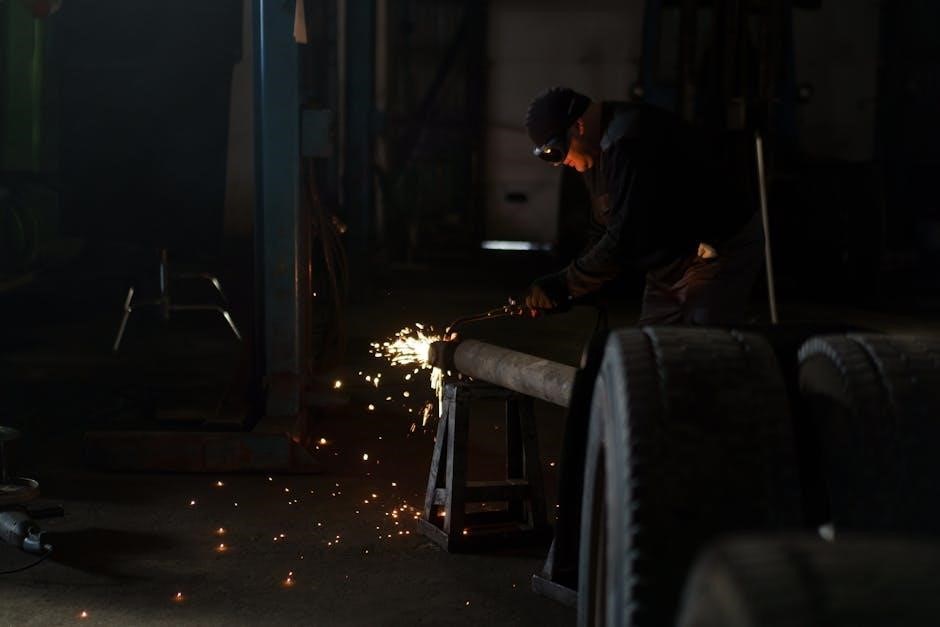
Manual pipe notchers excel in weld shops, frame fabrication, and custom pipe projects, including creating sink outflows in round or rectangular metal pipes.
Weld Shops
Manual pipe notchers are invaluable assets within weld shops, streamlining the preparation of pipes for various welding applications. Their portability allows for use in diverse shop locations, and the precision they offer ensures tight-fitting, high-quality welds. Specifically, Scotchman notchers quickly and accurately create notches for double corner joints, a common requirement in many welding projects.
The ability to notch 1-1/2 and 2 Schedule 40 Pipe efficiently contributes to increased productivity. Furthermore, the rugged construction of these notchers withstands the demands of a busy welding environment, providing long-lasting reliability.
Frame Fabrication
Manual pipe notchers play a crucial role in frame fabrication, particularly when constructing structures utilizing round or rectangular metal pipes. The precision notching capabilities ensure accurate joints, essential for structural integrity and aesthetic appeal. Scotchman pipe notchers excel at creating these precise notches quickly and efficiently, boosting productivity.
Whether building chassis, roll cages, or custom frames, the portability and user-friendliness of these tools are highly beneficial. They allow fabricators to work effectively in various locations, delivering professional results consistently.
Custom Pipe Projects
Manual pipe notchers are invaluable for artisans and hobbyists undertaking custom pipe projects. From furniture creation to artistic sculptures, the ability to precisely notch pipes opens up a world of design possibilities. The control offered by manual notchers surpasses powered alternatives, allowing for intricate and personalized cuts.
Scotchman notchers even facilitate cutting out sink outflows in round and rectangular pipes, showcasing their versatility. Their rugged construction ensures durability, handling repeated use in demanding creative environments, delivering professional-grade results.
Pipe Notching Techniques
Manual pipe notchers excel at creating notches for double corner joints quickly and accurately. Mastering the art requires practice and understanding the tool’s capabilities;
Notching for Double Corner Joints
Manual pipe notchers are ideally suited for creating precise notches required for strong and aesthetically pleasing double corner joints. These joints, commonly used in frame fabrication and custom metalwork, demand accuracy to ensure a flush and secure weld.
Scotchman pipe notchers facilitate this process by allowing controlled material removal, resulting in perfectly matched angles. Achieving a clean notch is crucial for weld penetration and structural integrity. Proper technique, combined with the notcher’s capabilities, delivers professional-quality results consistently.
Achieving Accuracy in Notching
Accuracy is paramount when using a manual pipe notcher, directly impacting weld quality and structural soundness. Consistent pressure and a steady hand are essential during operation. The eccentric shaft transmission and lever system aid in transferring force, but operator control remains key.
Careful setup, ensuring the pipe is securely clamped, minimizes vibration and ensures a clean cut. Regularly inspecting the cutting arc and making minor adjustments throughout the process further refines precision, leading to professional-grade notches.
Mastering the Art of Pipe Notching
Pipe notching, particularly with manual tools, demands practice and understanding of material properties. Begin with scrap pieces to refine technique and gauge the appropriate force needed for different pipe schedules and wall thicknesses. Consistent, smooth lever operation is crucial for uniform cuts.
Expert notchers emphasize the importance of visualizing the final joint and adjusting the notcher accordingly. Mastering this skill ensures perfect alignment and strong, reliable welds in frame fabrication and custom projects.

Pipe Size Compatibility
Manual pipe notchers, like the AL2 model, effectively notch 1-1/2 and 2 Schedule 40 pipes, accommodating both round and rectangular metal tubing.
Notching 1-1/2 and 2 Schedule 40 Pipe
Manual pipe notchers demonstrate remarkable capability when working with commonly used pipe sizes, specifically 1-1/2 and 2 Schedule 40 pipe. The Scotchman AL2 model is specifically highlighted for its proficiency in handling these dimensions. This compatibility makes these notchers exceptionally valuable for a wide range of fabrication projects.
Achieving clean, accurate notches in these pipe sizes is crucial for strong, precise welds and robust structural integrity. The design of these manual notchers ensures consistent results, minimizing the need for rework and maximizing efficiency in the workshop environment.
Compatibility with Round and Rectangular Pipes
Manual pipe notchers aren’t limited to just round pipes; they exhibit impressive versatility by accommodating both round and rectangular metal pipes. Scotchman specifically manufactures notchers designed for cutting out sink outflows in both shapes, expanding their application range significantly.
This broad compatibility makes them a practical choice for diverse fabrication needs, from exhaust systems to structural frameworks. The ability to notch both geometries streamlines workflows and reduces the need for multiple specialized tools, enhancing efficiency and cost-effectiveness.

Manual vs. Powered Pipe Notchers
Manual pipe notchers offer greater control and portability, relying on human force for precise cuts, while powered versions prioritize speed and automation.
Control and Precision
Manual pipe notchers excel in providing a level of control often unmatched by their powered counterparts. Unlike automated systems, the operator directly governs the cutting arc, allowing for nuanced adjustments and a feel for the material. This direct interaction translates to superior precision, particularly crucial for intricate designs or when working with delicate materials.
The hand-operated nature demands focused technique, fostering a deeper understanding of the notching process and minimizing errors. This is especially valuable for achieving accurate notches for double corner joints, a common application for these tools.
Portability Considerations
Manual pipe notchers offer significant portability advantages over larger, electrically-driven models. Weighing around 33 lbs, these notchers are light enough to be easily clamped or bolted to a workbench, or even wall-mounted for space-saving convenience. This makes them exceptionally well-suited for field work, on-site fabrication, or workshops with limited space.
Their self-contained operation eliminates the need for power outlets or cumbersome generators, further enhancing their adaptability and making them ideal for remote locations or projects requiring frequent relocation.
The Role of Technology in Reducing Manual Labor
While manual pipe notchers rely on human power, technology continues to play a role in easing the workload within metalworking. Automation has impacted many areas, sometimes replacing manual labor entirely, as seen with the decimation of workforces in some industries. However, manual notchers still offer a unique level of control.
Technology assists by improving materials and designs, but the core function of precise notching often benefits from the operator’s skill and direct input, complementing rather than replacing manual effort.
Finding Manuals and Documentation
Manuals are easily found online via databases; search by keywords like name, description, or size to read or download documents quickly.
Online Manual Databases
Numerous online resources specialize in hosting technical documentation, including manuals for Scotchman pipe notchers and other models. These databases allow users to search for specific manuals using keywords, model numbers, or descriptions.
Often, you can directly view the manual within your web browser or download it as a PDF file for offline access. These platforms frequently categorize documents by manufacturer and product type, streamlining the search process.
Furthermore, many sites offer user forums where individuals share manuals and troubleshooting tips, creating a collaborative knowledge base for manual pipe notcher owners.
Searching by Keywords (Name, Description, Size)
Effective searching for manual pipe notcher documentation relies on precise keywords. Start with the manufacturer’s name, “Scotchman,” combined with “pipe notcher.” Include the model name or number if known.
Descriptive terms like “manual,” “wall-mountable,” or “portable” refine results. Specifying the pipe size compatibility – “1-1/2 inch” or “2 inch Schedule 40” – narrows the search further.
Don’t overlook page count as a search parameter; longer manuals often contain more detailed information. Experiment with different keyword combinations for optimal results.
Sharing Documents on Social Networks
Facilitating knowledge sharing about manual pipe notchers is streamlined through social media platforms. Users can readily distribute found manuals and documentation to colleagues and fellow enthusiasts.
Platforms like Facebook groups dedicated to metalworking, welding, or fabrication provide ideal spaces for sharing resources. LinkedIn is suitable for professional networking and document exchange.
Ensure shared documents are legitimate and free of malware. Consider adding descriptive captions highlighting the manual’s relevance to specific pipe notching tasks or models.
Safety Considerations
Proper mounting is crucial for stable operation of a manual pipe notcher. Always ensure secure attachment and safe use of the lever system.
Proper Mounting Techniques
Securing your manual pipe notcher is paramount for safe and accurate operation. These machines are designed to be clamped or bolted to a sturdy workbench, or conveniently wall-mounted. Ensure the surface is level and capable of supporting the notcher’s weight – approximately 33 lbs.
Bolting provides the most secure attachment, preventing movement during use. When clamping, utilize robust clamps and regularly check their tightness. A stable setup minimizes vibration and maximizes control, leading to cleaner, more precise notches and reducing the risk of accidents.
Safe Operation of Lever Systems
The lever system on a manual pipe notcher amplifies force, enabling efficient cutting with minimal effort. However, safe operation is crucial. Always maintain a firm grip and controlled movements when operating the lever. Avoid sudden or jerky motions, which can lead to loss of control and potential injury.
Keep hands and body clear of the cutting arc during operation. Never reach over or around the moving lever. Wear appropriate safety glasses to protect your eyes from metal shavings. Regular inspection of the lever mechanism ensures smooth and safe functionality.

Maintenance and Care
Regular inspection and lubrication are vital for a manual pipe notcher’s longevity and performance. This ensures smooth operation and prevents malfunctions over time.
Regular Inspection
Consistent inspection of your manual pipe notcher is crucial for maintaining optimal functionality and preventing unexpected issues. Carefully examine the cutting arc for any signs of wear or damage, ensuring it remains sharp and effective; Thoroughly check the lever system, verifying smooth movement and secure connections.
Inspect the mounting hardware, confirming it’s tightly fastened to prevent instability during operation; Look for any loose bolts or cracks in the frame. Regularly assess the eccentric shaft transmission for proper alignment and lubrication. Addressing minor issues promptly can prevent them from escalating into costly repairs, extending the tool’s lifespan.
Lubrication
Proper lubrication is essential for the smooth and efficient operation of your manual pipe notcher. Focus on the eccentric shaft transmission, applying a high-quality lubricant to ensure minimal friction and effortless force transfer via the lever system. Regularly lubricate all moving parts, including pivot points and bearings, to reduce wear and tear.
This preventative maintenance extends the tool’s lifespan and maintains consistent cutting accuracy. Avoid over-lubrication, as excess grease can attract debris. Wipe away any excess lubricant after application. Consistent lubrication contributes to a safer and more productive metalworking experience.

Troubleshooting Common Issues
Common problems include cutting arc issues and lever system malfunctions. Inspect for debris or damage, ensuring proper lubrication and adjustment for optimal performance.
Cutting Arc Problems
Addressing cutting arc issues on a manual pipe notcher often begins with a thorough inspection of the cutting tool itself. Ensure the arc is sharp and free from any accumulated debris, as this can significantly impede a clean, consistent notch. Check for proper alignment between the arc and the pipe’s surface; misalignment can cause uneven cutting or prevent the arc from engaging effectively.
Furthermore, verify the correct pressure is being applied through the lever system. Insufficient pressure may result in a shallow or incomplete cut, while excessive force could damage the arc or the machine. Regular maintenance, including cleaning and sharpening the arc, is crucial for preventing these problems and maintaining optimal performance.
Lever System Malfunctions
Troubleshooting lever system issues on a manual pipe notcher requires careful examination. A common problem is reduced force transfer, often due to lack of lubrication or a loose connection point within the eccentric shaft transmission. Inspect the lever arm for bends or cracks, as these can compromise its structural integrity and reduce efficiency.
Ensure the lever moves smoothly through its full range of motion; any binding suggests a need for adjustment or repair. Regular lubrication of all moving parts is vital for preventing malfunctions and maintaining consistent performance. If issues persist, consult the manufacturer’s documentation for specific guidance.
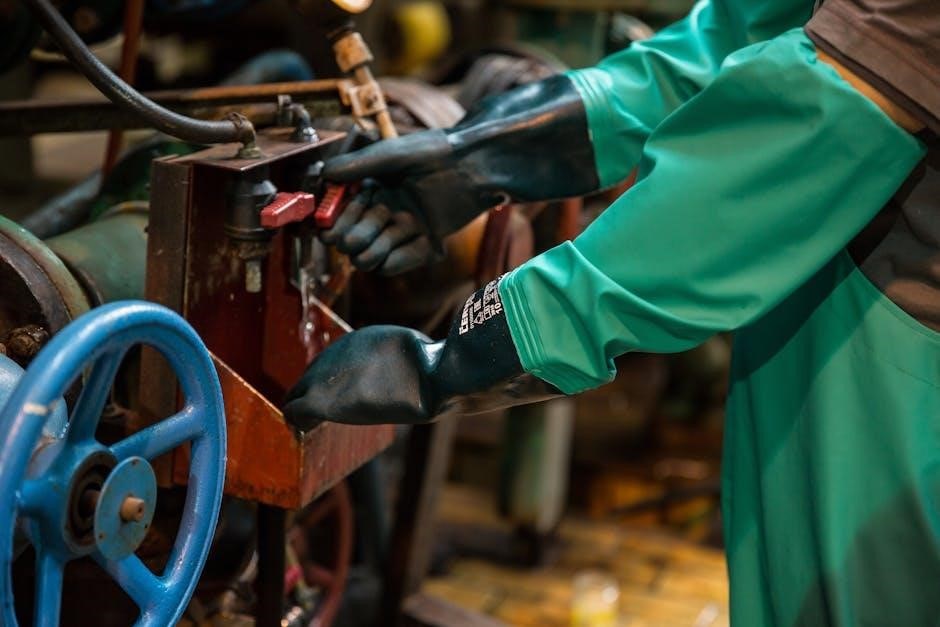
The Future of Manual Pipe Notching
Manual pipe notching will likely see integration with new technologies, but demand for its precision and control will remain strong in specialized applications.
Integration with New Technologies
While manual pipe notchers excel in control, future advancements may blend traditional methods with modern technology. Expect to see digital angle guides, potentially integrated with smartphone apps, enhancing accuracy and repeatability. Laser alignment systems could assist in setup, minimizing errors.
Furthermore, improved materials and ergonomic designs, informed by computer-aided engineering, will reduce operator fatigue. Though unlikely to fully automate the process, technology will lighten the burden of manual tasks, improving efficiency and precision for skilled metalworkers.
Continued Demand for Precision and Control
Despite advancements in automated pipe notching, a consistent demand for manual notchers will persist. Many applications, particularly custom fabrication and artistic metalwork, require the nuanced control only a hand-operated tool provides. Skilled craftspeople value the direct feedback and ability to make minute adjustments during the notching process.
This demand ensures manual notchers remain relevant, offering a balance between affordability, portability, and the irreplaceable skill of the operator, catering to specialized needs beyond automated capabilities.